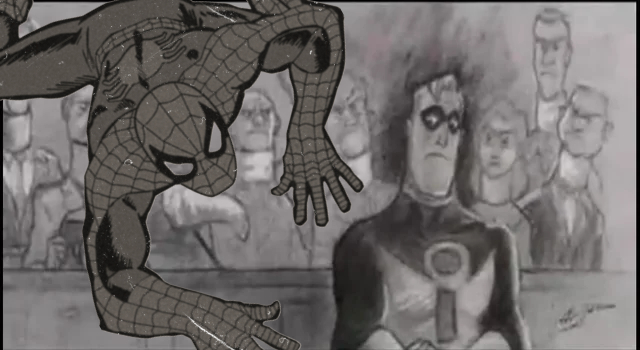
On October 24, 2004, Disney and Pixar released “The Incredibles,” a movie starring the Parr family as their patriarch, Bob Parr, navigates retired life as a result of superheroics being outlawed. In the film, Bob lives a double life as the hero, Mr. Incredible. However, his and every super’s heroic days were numbered after Bob saved Oliver Sansweet from a suicide attempt. As a result of Bob’s intervention, Sansweet survived his suicide attempt, but suffered several fractures. Sansweet sued Bob as Mr. Incredible, claiming that he did not want to be saved.
Sansweet v. Incredible showcases certain doctrines of American tort law. Under American law, there is generally no affirmative duty to act. That includes rescues. Legally speaking, if you see someone in peril, you owe them no duty to act. However, if you attempt a rescue, you now owe a duty to the person you are rescuing to act with reasonable care. Meaning, you must not leave them in worse situation than where you found them. In Mr. Incredible’s case, he owed Sansweet a duty to act with reasonable care in conducting the rescue, which Mr. Incredible breached by causing Sansweet to sustain injuries. Another doctrine of American law that Sansweet v. Incredible showcases is the doctrine of tortious/civil battery. Under American law, Battery is the (1) intentional, (2) harmful or offensive, (3) contact, (4) with another person. For the purposes of a tortious battery case, “harmful or offensive” contact does not need to be a punch or a kick, rather it can be any contact that the other person does not consent to or that targets a known vulnerability of that other person. In Mr. Incredible’s case, he intentionally rescued Sansweet without his consent. Or as Sansweet’s lawyer puts it “my client did not want to be rescued.”
Although fictional, the legal doctrines applicable to Sansweet v. Incredible are real and asks a good question for superheroes and our daily lives, should we help others?
“When you can do the things that I can, but you don’t, and then the bad things happen? They happen because of you.”
– Peter Parker, Captain America: Civil War (2016)
The idea that “with great powers must also come great responsibility” is not a new invention. In the New Testament, Luke 12:48 says “From everyone who has been given much, much will be demanded; and from the one who has been entrusted with much, much more will be asked.” In the Hadith, it says “All of you are shepherds and each of you is responsible for his flock.” Examples of power and responsibility being intrinsically link is common throughout our history. British Parliament member William Lamb once proclaimed “the possession of great power necessarily implies great responsibility.” This is the concept of “Noblesse oblige” or the idea that power cannot simply be enjoyed for its perks, but it must also hold those with power morally responsible. Or as the 2020 Shonen Jump Manga Mashle: Magic and Muscles put it “the strong help the weak.” However, nowhere is this idea of the link between power and responsibility ever more present than with Spider-Man.
Peter Parker was a young orphaned boy raised by his uncle Ben and aunt May. One day, Peter gets bitten by a radioactive spider which kicks off a life of adventure, achievements, romance, and tragedy. Lots of tragedy. However, regardless of whether it’s the death of his uncle Ben, his aunt May or whatever tragedy the infinite earths doles out for the web-head, he always learns the same lesson. With great powers, must also come great responsibilities. This is the barest essential of the Spider-Man character, regardless of whether he’s Peter Parker, Gwen Stacy, Miles Morales, Peni Parker, or a cartoon pig. And for many of us, this is the lesson also imparted to us by our families, communities, or even faith. But that idea that, if you have the power to do something, like help others, then it is your responsibility to do so, conflicts directly with existing legal doctrines. So what prevails? The law or our responsibility to others? Do we even have a responsibility to others when the law itself states there is no general duty owed to act?
There are some exceptions to the rescuer doctrine, such as the Good Samaritan Doctrine and its codification in different state Statutes wherein a rescuer is protected from liability if they cause unintentional harm as a result of providing aid to others. But how the law applies varies from state to state. More importantly, it only covers negligence cases where the rescuer doctrine applies. Generally, it does not shield people from Battery suits. So, in a legal landscape where acting in aid of others is generally discouraged, what do we do? Should we turn a blind eye to those in need? Living in fear that our actions could lead to life changing lawsuits like the one illustrated in The Incredibles? Or do we risk it and, like Spider-Man, do whatever it is in our power to help others?
At the end of the Incredibles, the titular family saves the day. In the sequel, Supers are slowly welcomed back in society. Despite not being addressed directly, the movie does come to a conclusion on which side to take on the “to act or not to act debate,” and it’s to act. Fearlessly, the Incredibles saved the day from Syndrome, the Underminer, and the Screenslaver. Even in the beginning of the first film, Mr. Incredible acts in aid of others, moonlighting as a ski-masked clad vigilante with the aid of his friend Frozone.
The Incredibles are not the only superhero story to show heroes simply acting in aid of others without fear of lawsuits or legal repercussion. In Shonen Jump’s My Hero Academia, one of the core traits of a good hero is that their bodies just moved on their own, without thought, all to aid others. Spider-Man for example, does so constantly. To the point where the crushing weight of the responsibility often suffocates Peter, leaving him to suffer more than any one man should, all in the service of the responsibility entrusted in him by his powers. But we are not superheroes. We live in the real world where, depends on where you live, there are consequences even for good acts.
So what do we do? Perhaps the question itself is too grand, too absolute, too beyond our reach as individuals. It is not our responsibility to save everyone or even one person. The answer likely lies in the first part of the equation “with great powers.” Perhaps we should only act within our means, within our abilities, within our limitations. We can’t save others out of a burning building, it isn’t within our power and therefore isn’t our responsibility. But things that are within our power? Those should at least be considered as our responsibility. Even if we aren’t amazing, spectacular, or incredible, we still have power. Power comes in many form, ability, resources, position, or money. It is then, that we should use that power wisely and act in service of our responsibility, even if it isn’t legally mandated to be our duty to do so. We cant stop a moving truck, but if we can help someone up, then we should. If we can speak for those who can’t speak for themselves, then we should. In the small ways we have power, we must also act in service of the responsibility those bring.

 The Timely Planet
Leave a comment